GLOBAL TENSIONS
How to read current conflicts in light of the Bible?
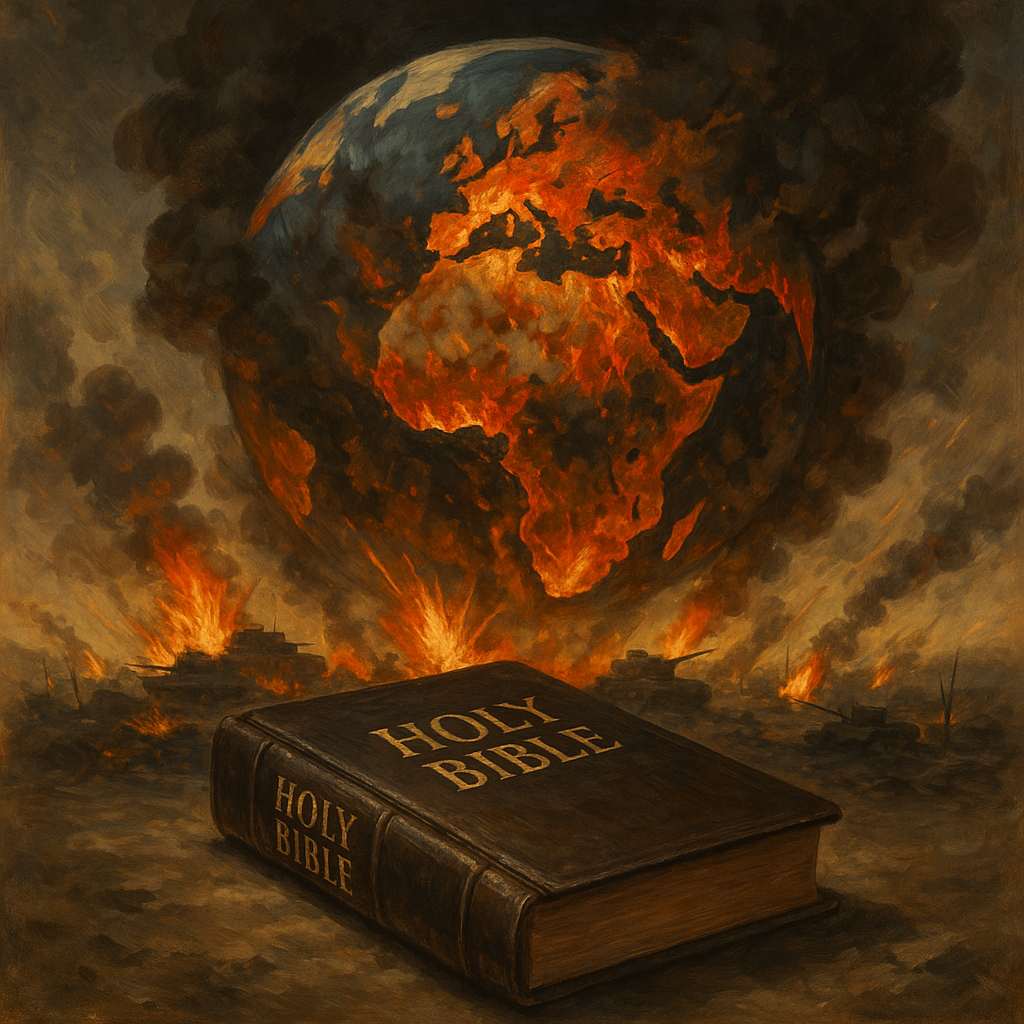
In recent days, the global landscape has been shot through with increased international tensions. From the arms race to growing geopolitical instability to “frozen” conflicts that are heating up again, we are witnessing a scenario that tests nations and generates widespread fears among populations.
As governments gather in urgent summits and the media continuously broadcast updates, many are asking, “What is happening to our world?”
For the believer, the most important question becomes, “How to interpret these events with spiritual eyes?”
Certainly, in recent times we observe a compacting of an anti-Christian front. We can note that, while Christians still discuss among themselves their divisions and different doctrines, for some Islamic terrorists there is no such thing as a Catholic Christian or a Protestant Christian, but simply a Christian, destined – according to the most intransigent – to be eliminated because he or she is defined as an “infidel” and a “heretic.” Actually, this distance between the different Christian denominations, while it exists, has been mitigated by the latest doctrinal documents: for example, the encyclicals of Pope John Paul II : the Encyclical “Ut Unum Sint,” dated May 25, 1995. address the issue of Christian unity.
Let’s look at what the Bible says, at the time of Christ’s return, only believers in Him will be welcomed; according to a biblical interpretation, no distinction will be made between Catholics, Protestants or other denominations: only one category will be introduced: those who have believed in Christ.
However, we cannot ignore the events that show that we are living in crucial times in particular we list below some aspects that cannot ultimately be overlooked.
1. An increasingly unstable world
We cannot ignore what is happening:
– Rivalries between major powers are growing.
– Some regions of the world are returning to violence.
– Rising prices, economic insecurity and mass migration generate social tensions.
– Public discourse has become more aggressive and polarized.
– Military technology is advancing faster than diplomacy.
It is a complex tangle that intertwines powers, economic interests, cultural identities and human frailties.
But for the Christian this is not a sudden surprise: Scripture speaks of turbulent times from the Old Testament prophets to the words of Jesus and the apostles.
2. “Wars and sounds of wars”: what did Jesus mean?
Jesus said:
“Ye shall hear of wars, and of the noise of wars…but beware lest ye be troubled; for it must come to pass, but it shall not yet be the end.” (Matthew 24:6)
This phrase is often quoted but sometimes misunderstood. Jesus was not saying, “Whenever there is a war, the end is near,” but, “Wars are part of human history; they should not upset you nor frighten you, for I am with you.”
The Lord’s intent is clear:
– Don’t feed fear.
– Do not fall into confusion.
– Do not be paralyzed by uncertainty.
– Do not lose faith in the face of global crises.
Wars are one of the fruits of man’s fall, sin, selfishness, and desire for dominion (James 4:1-2). That is why they will continue until the return of the Prince of Peace.
Many believe that certain events confirm the truthfulness of the words spoken by the Lord Jesus Christ. For example: he predicted that of the temple there would be no stone left upon stone (Matthew 24:2), and in 70 A.D. the temple in Jerusalem was indeed destroyed, and to this day only the “wailing wall” remains .
Similarly, today we see powerful wars ravaging for the past century, the State of Israel returning as a nation in 1948, the Holocaust occurring in the last century. When we consider these things, we cannot help but recognize that what He said is true and remains true.
We live in an age when we are bombarded with news that overwhelms, confuses and upsets us. Let us analyze these phenomena in the light of God’s Word.
3. The risk of over-information
We live bombarded with news: notifications on the phone, videos, live feeds, endless debates.
This overexposure can create:
– anxiety,
– confusion,
– A sense of helplessness,
– A distorted perception of reality.
The Bible, however, calls for sobriety:
“Be sober and vigilant…” (1 Peter 5:8)
The believer is informed but not overwhelmed.
Vigil, but not fear.
He observes, but does not allow himself to be dominated.
4. How should the Christian respond?
(a) Pray for peace and for the peoples involved.
The first response is not political outrage, but prayer. The Lord calls us to intercede for:
– victims,
– divided families,
– the rulers,
– the suffering children,
– Churches living in conflict zones.
b) Being peacemakers
Jesus said:
“Blessed are the peacemakers, for they shall be called children of God.” (Matthew 5:9)
The believer should be a balm in arguments, not gasoline on the fire. In an angry world, the Christian is a messenger of reconciliation.
(c) Maintain confidence in God’s sovereignty.
Even when history seems to be derailed, the Bible affirms:
“The Lord reigns.” (Psalm 97:1)
God never loses control. The nations stir the waters, but God’s throne is still.
(d) Witnessing hope in a world that is afraid.
The more confused the world is, the more Christian hope shines. People are not looking for complex theology: they are looking for peace, certainty, answers, light. We are called to bring them.
(e) Tell the truth. Exercise one’s right as a citizen to denounce and not let atrocities committed anywhere in the world fall into silence.
5. Conflicts as a spiritual mirror of humanity
Every war comes first from the hearts, and then from the borders.
The Bible is clear:
“It is the passions that make war in your members… You desire and do not have.” (James 4:1-2)
Global tensions are a great mirror of man without God:
– pride,
– greed,
– fear,
– thirst for power,
– Lack of forgiveness.
We cannot change the nations, but we can allow the Holy Spirit to change us. The renewal of the world always begins with the renewal of the heart.
6. Live these times with vigilance, not terror
The Bible invites us to recognize the “signs of the times,” but not to fall into speculation or prophetic panic.
The believer awaits Christ’s return not as a threat but as a hope:
“When these things begin to take place, arise and lift up your heads, for your redemption is at hand.” (Luke 21:28)
This is not a call to isolate oneself, but to live
– more full of faith,
– more sober,
– more committed,
– holier-than-thou,
– More in love with Christ.
In conclusion: in a trembling world, God remains unchanging.
The world trembles, history is shaken, nations confront each other, but God remains the same.
The gospel remains power.
The Church remains the light of the world.
May these difficult days be an invitation for us to:
– Renew our trust,
– Strengthen our fraternal fellowship,
– To be men and women who bring Christ where fear reigns,
– Not to be dominated by events, but to dominate events by faith.
“The Lord is my refuge and my fortress…In Him I will trust.” (Psalm 91:2)
Francesco Pastone