PERSECUTION IN NIGERIA
Report on the ongoing persecution and the call to hope
Nigeria is now one of the most dangerous places in the world for Christians.
According to various organizations (Open Doors, local NGOs, international observers), more Christians are killed in Nigeria than in any other country every year.
On the Open Doors (“Open Doors”) World Watch List 2025, which ranks the 50 countries where Christians suffer the most severe persecution, Nigeria is listed as the most violent country for those who follow Jesus and ranks high on the list.
In recent years, the figures vary depending on the source, but the overall picture is dramatic:
- Between 2019 and 2023: nearly 17,000 Christians killed in targeted attacks because of their faith.
- First seven months of 2025: more than 7,000 Christians killed and about 7,800 kidnapped, according to a report by the Nigerian NGO Intersociety, picked up by various media and institutions.
- Since 2009: some estimates speak of over 50,000 Christians killed and thousands of Christian Churches and Schools attacked or destroyed (over 19-20,000 Christian places of worship/institutes damaged).
- One report for the British Parliament, for example, speaks of 1,637 Christians killed and 642 abducted in a single year, just in some of the areas monitored.
These numbers are not just statistics: behind them are villages razed to the ground, families destroyed, communities on the run, pastors and priests kidnapped or killed.
The persecution of Christians in Nigeria is not caused by one group, but by a combination of violent actors:
- Boko Haram and ISWAP (Islamic State in West Africa).
- Jihadist groups active mainly in the Northeast (Borno, Yobe, Adamawa).
- They hit churches, Christian villages, schools (recall the infamous student kidnappings).
- Thousands of Christians killed and kidnapped in the last 10-15 years.
- Militias of radicalized Fulani pastors (Fulani militants)
- Active in “Middle Belt” areas (Benue, Plateau, Kaduna, Nasarawa, etc.), where Christian populations (often farmers) and Muslim populations (often herders) coexist.
- Attacks are often presented as “ethnic or land conflicts,” but many Christian and NGO sources emphasize a strong religious dimension: Christian villages attacked, churches burned, Christian communities forced to flee.
- Armed bandits and criminal groups
- Kidnappings for ransom (including priests, pastors, catechists), village assaults, robberies.
- The line between crime and religious persecution is often thin, but the result for Christians is the same: insecurity, fear, targeted violence.
Persecution in Nigeria takes many forms:
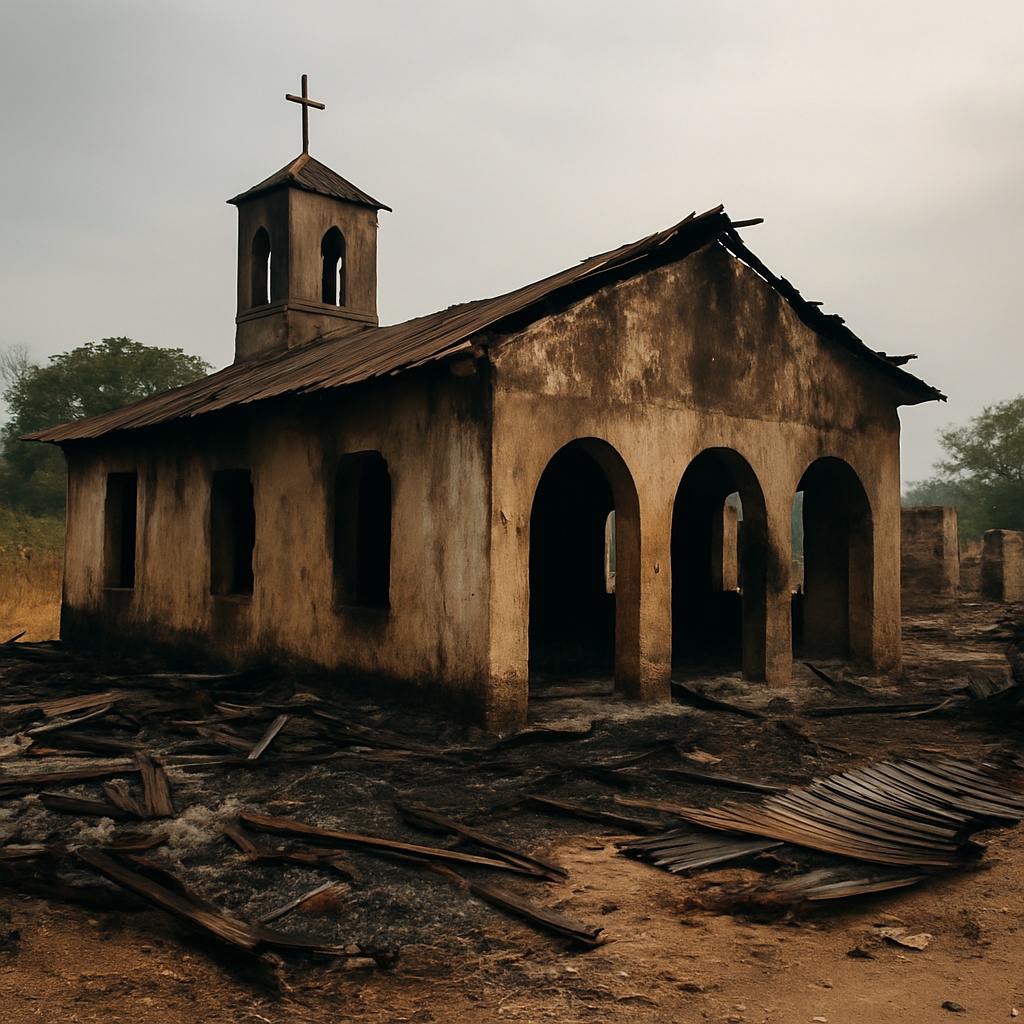
- Mass killings in Christian-majority villages (night attacks, houses set on fire, people burned alive or shot while fleeing). Open Doors USA+1
- Attacks on churches during Sunday services or celebrations (bombs, shootings, fires).
- Kidnappings of priests, pastors and Christian leaders, often for ransom, sometimes ending in the killing of the hostage. More than 600 clergy and pastors kidnapped in a few years, including many Catholics.
- Sexual violence and forced marriage against abducted Christian women and girls.
- Destruction of Christian property: homes, schools, hospitals, training centers belonging to churches or missions.
- Legal and social pressures in the 12 northern Shariah states, where Christians face restrictions and discrimination.
Many NGOs and international observers accuse the Nigerian government of insufficient response, lack of effective protection, and unfortunately impunity for many of those responsible. The government, for its part, tends to present the crisis as generic violence or terrorism without a specific religious dimension, insisting that all communities, Christian and Muslim, are suffering (which is true, but does not negate the anti-Christian component).
Nigeria has been placed or reinstated on the U.S. list of “Countries of Particular Concern” for religious freedom, with calls for sanctions and diplomatic pressure. In Europe, Parliament and several bishops’ conferences/Christian bodies have issued statements of condemnation and calls for action.
These facts of unprecedented severity and heinousness, we can interpret them in the light of Scripture, which leads us to consider:
- The body of Christ is one
“If one member suffers, all the members suffer with him” (1 Corinthians 12:26).
Nigerian Christians are not “them,” but part of us: of the same Church, the same Body.
- Persecution is part of Christian life, but not the last word
“Everyone who wants to live piously in Christ Jesus will be persecuted” (2 Timothy 3:12).
“You will be hated by all because of my name; but whoever has persevered to the end will be saved” (Matthew 10:22).
- The blood of martyrs as a seed of faith
In the history of the Church, persecution has not stopped the Gospel, but often made it more visible and powerful. This reality is also true today in Nigeria, where, despite everything, churches are alive, evangelizing, gathering and witnessing to Christ. - The call to prayer and practical action
- Pray for protection, consolation, perseverance.
- Support ministries and works that help persecuted Christians (humanitarian aid, psychological support, reconstruction, advocacy). Open Doors+1
But then , we believers , what should we do?
- Inform: publishing stories, reports, data so as not to ignore but to remember.
- Pray and intercede: for the affected families, for the abducted Christians, for the country’s leaders.
- Support: partnerships with NGOs, churches in Nigeria, relief and reconstruction projects.
- Raising awareness in our community: in our blog, in our churches, in social media.
- Remain vigilant: do not fall into indifference or “it’s too far away” but recognize that the global Church is involved.
Nigeria is not an isolated case, but it is one of the places where the crisis of Christian freedom is most acute. Behind the figures are faces: women, men, children, burned churches, fleeing communities.
But this is not the end of the story. The Gospel continues to flourish even in the deserts of persecution.
May this article serve not only to alarm, but to awaken our faith, our compassion, our commitment.
As Scripture says:
“Arise and lift up your heads, for your redemption is at hand.” (Luke 21:28)
Finally, we recall the prophet Amos 6:1’s warning, “Woe to those who live quietly in Zion…,” which serves as a powerful reminder to those who feel secure in their material conditions, urging them to reflect on their relationship with God and morality. Through a deeper understanding of the biblical verses and their connections, we can develop a richer and more complete vision of our life in Christ that makes us think of Nigeria as a story that belongs to us and an awareness that what happens over there is as if it were happening to us and our children.
Francesco Pastone